
Bilohiria Central Library
Bilohiria Central Library occupies the building of the local House of Culture and serves the Bilohiria territorial community in Khmelnytskyi region, home to almost 19 thousand residents.
Within the “Libraries for everyone” programme the library is being transformed into a modern, accessible and inclusive space for learning, connection and community development. The project is run by the 7CI GROUP architectural team — Larysa Prysukhina, Mariia Kyrylenko and Mykola Matsala. Research into the community’s needs and facilitation were provided by Olena Matviichuk. Special thanks to Khrystyna Kashchuk, who grew up in Bilohiria and helps strengthen the connection between the initiative and the community
Bilohiria Library is one of the two pilots of the “Libraries for everyone” programme. It is here that a model of the modern library is taking shape and being tested — one that can later be scaled to communities across Ukraine.
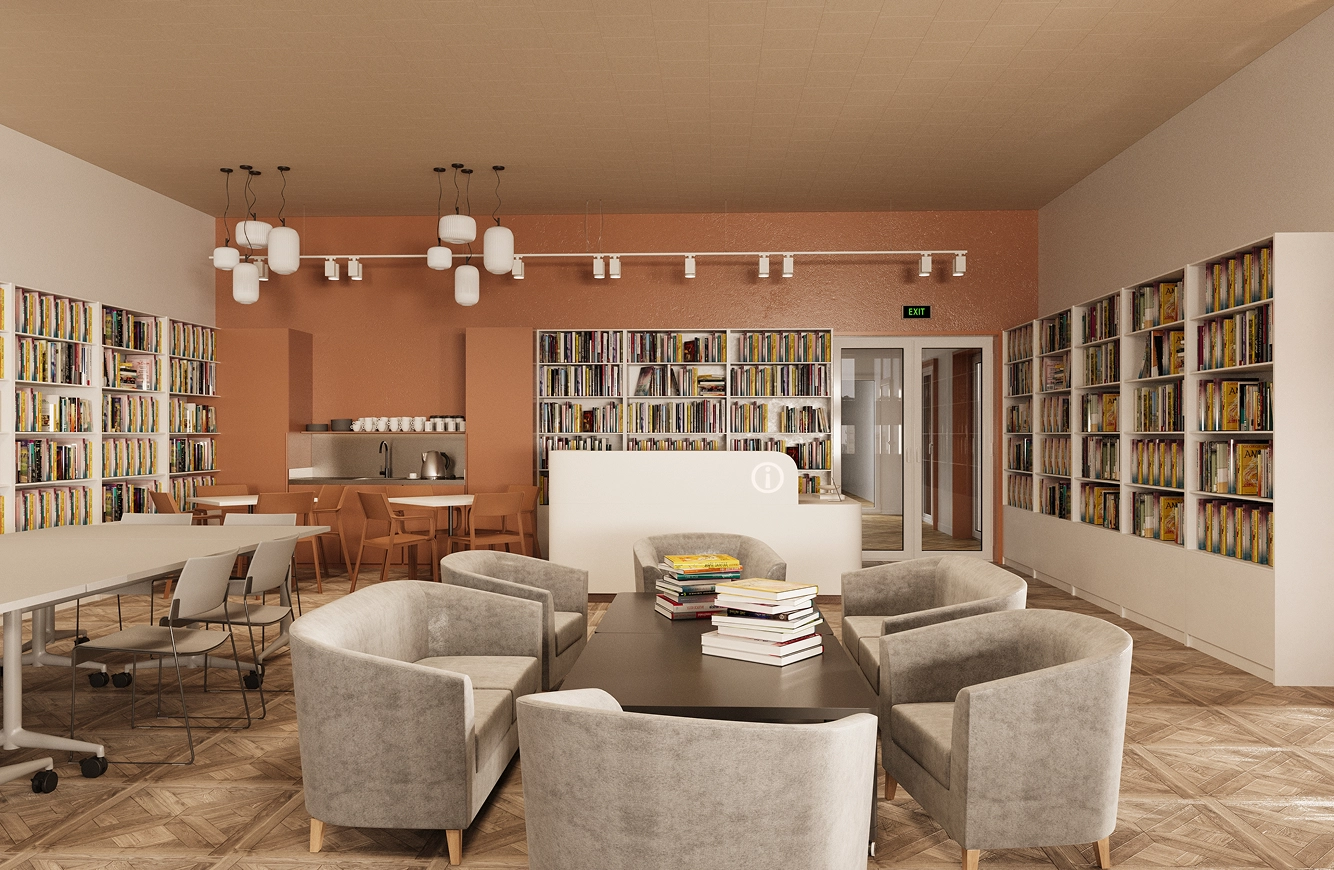
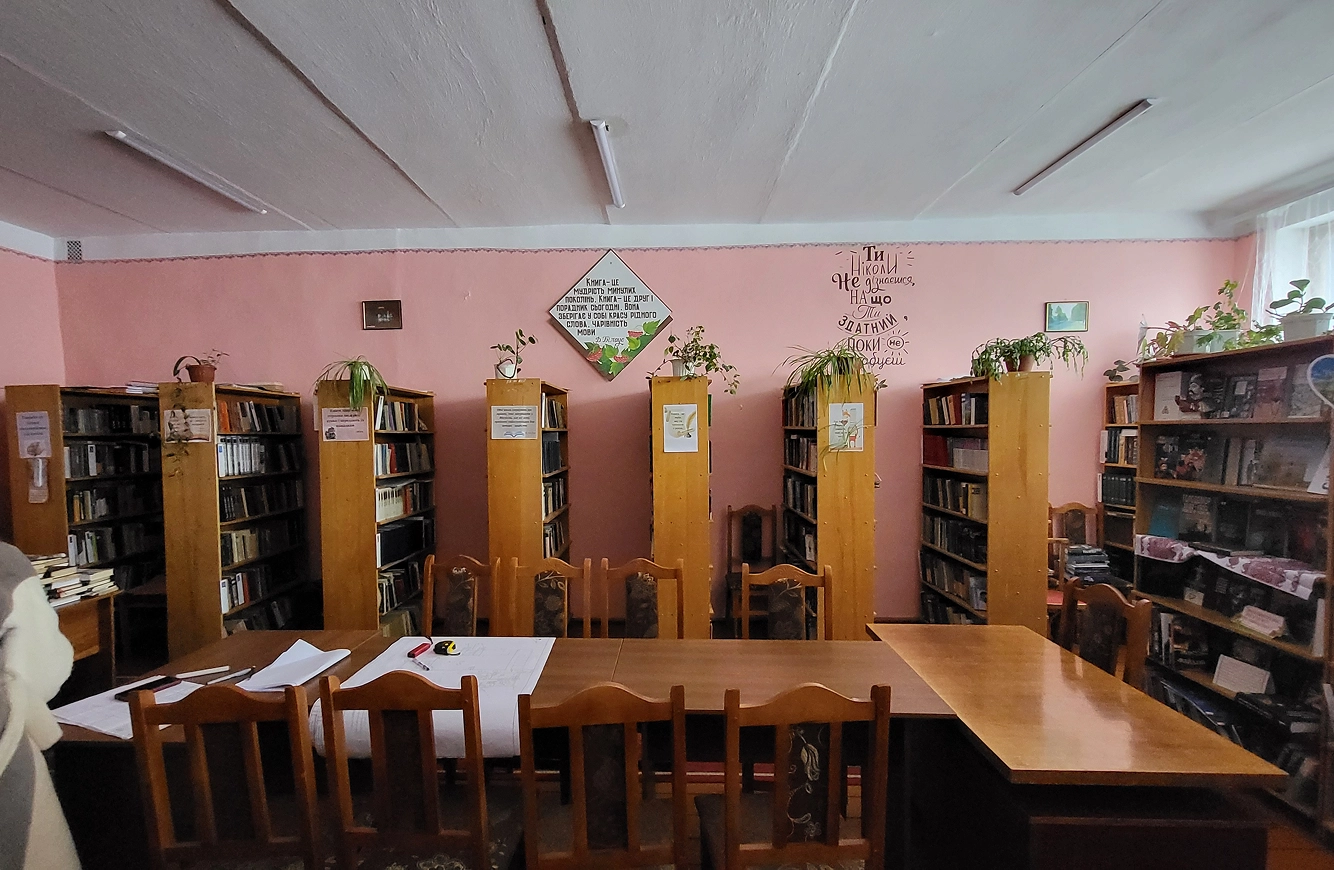
Drag to compare
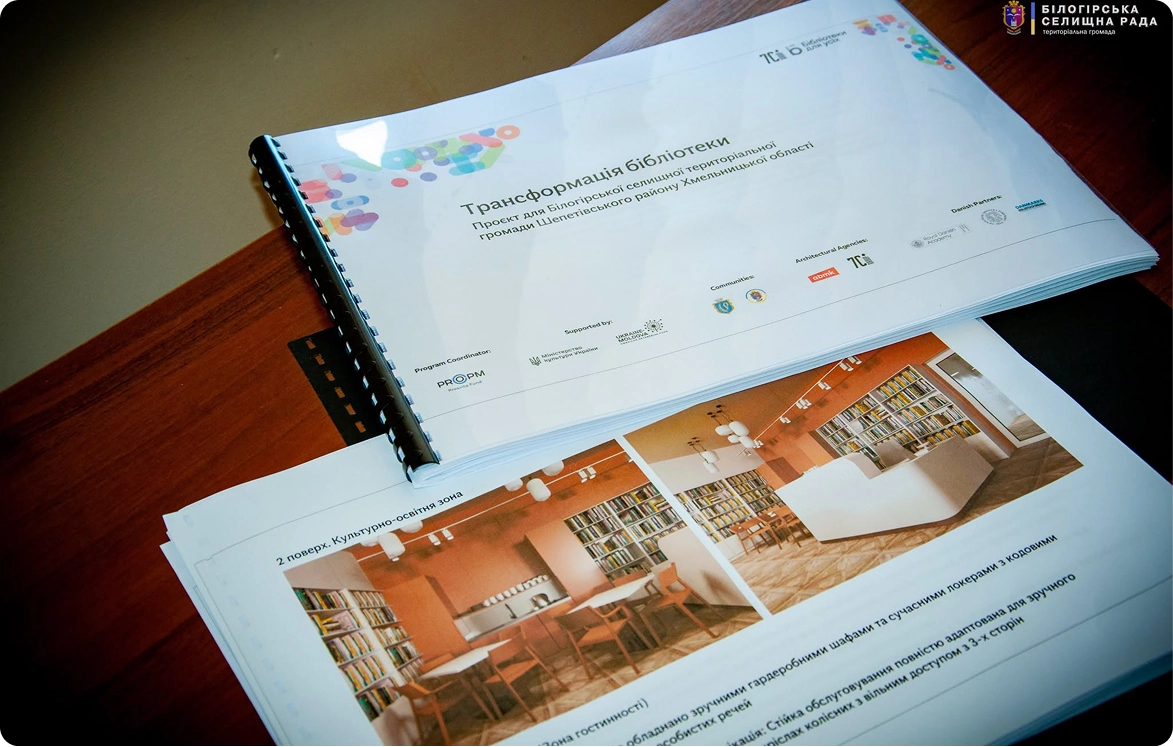
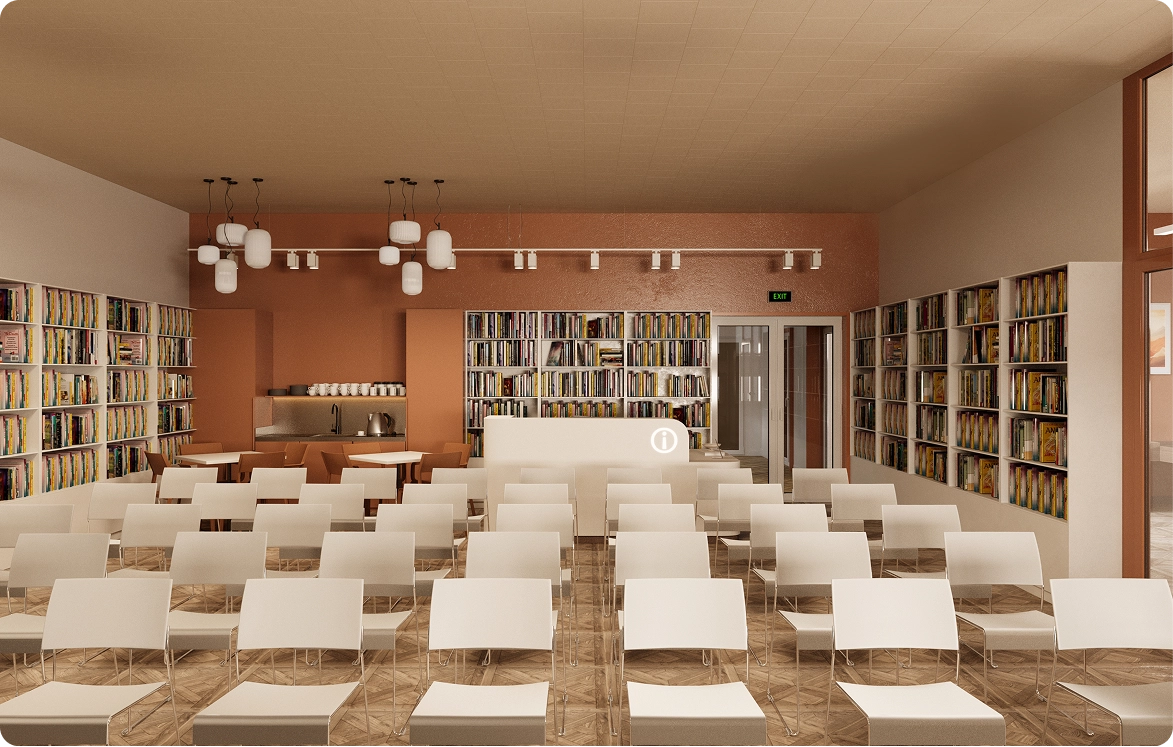
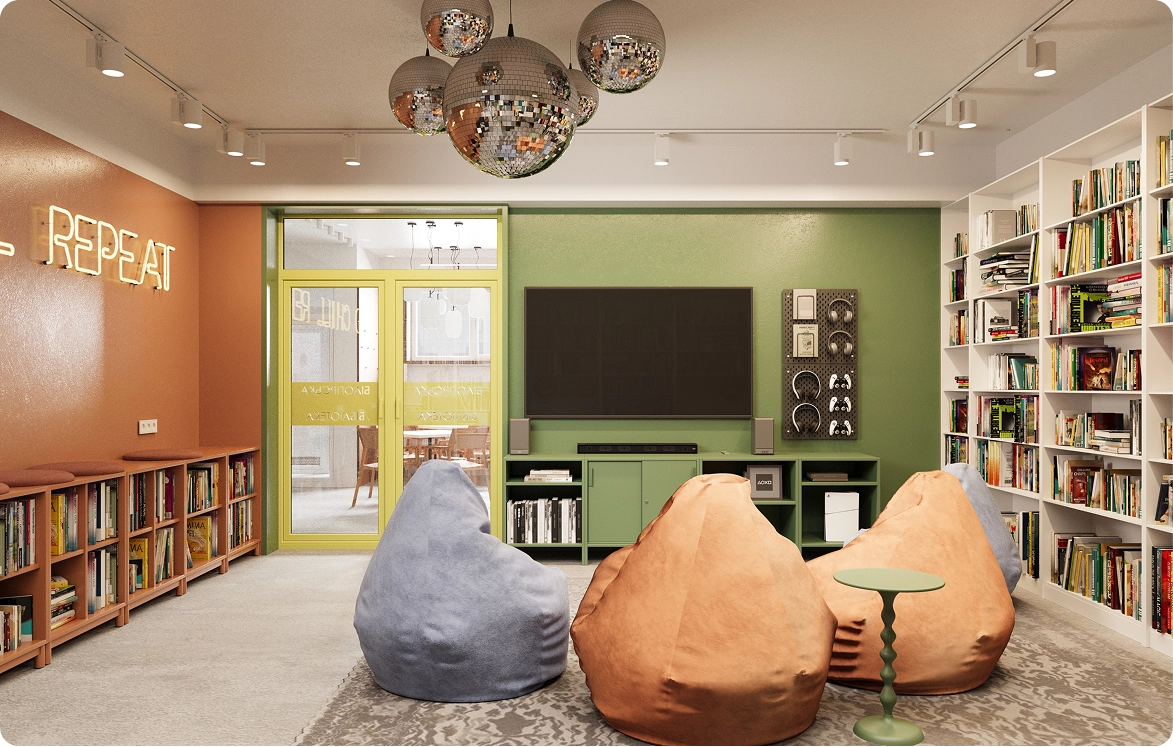
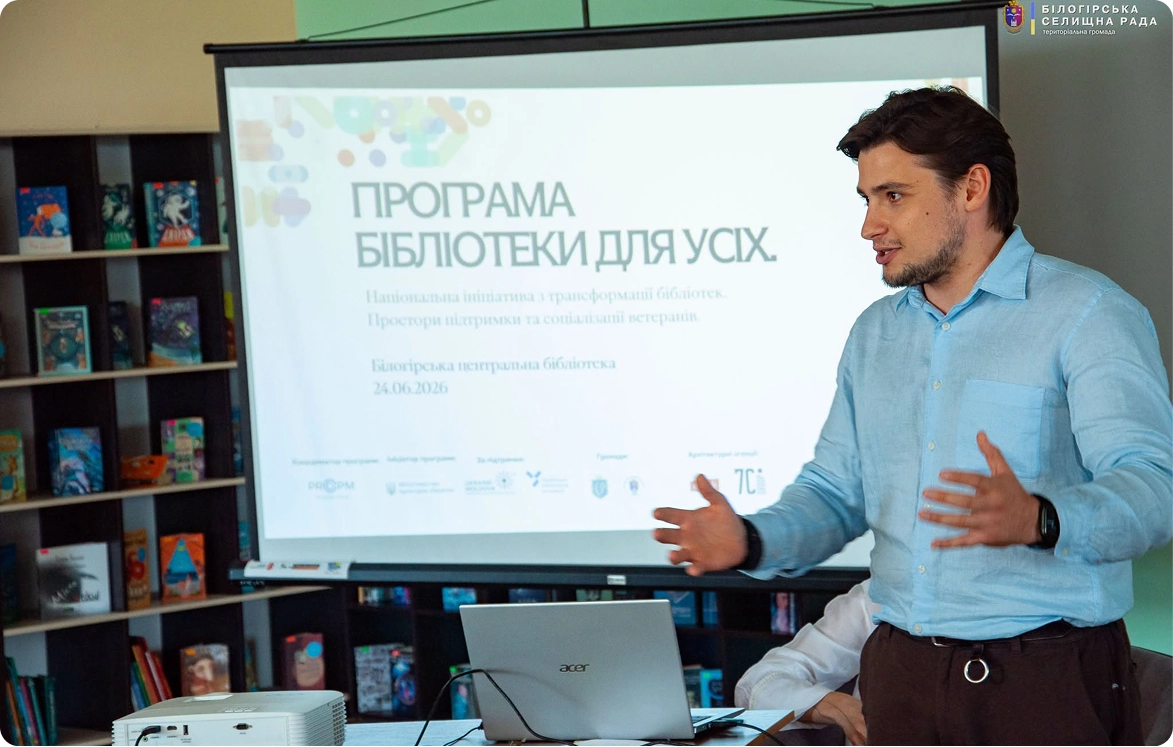
Project milestones and the current status of the Bilohiria library transformation
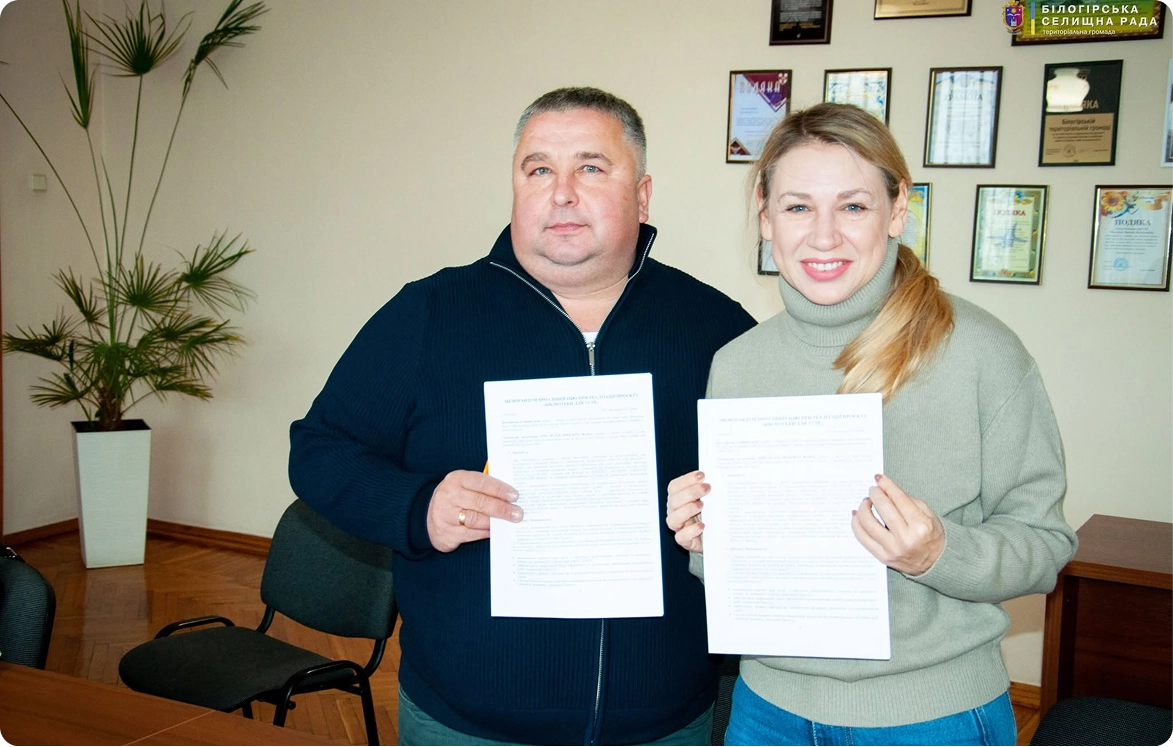
The transformation of Bilohiria Central Library began in November 2025 with a memorandum of cooperation signed by Vasyl Vasylovych Melnyk, head of the Bilohiria settlement council, and the PRO PM PROSVITA FUND NGO. That is when the community formally joined the “Libraries for everyone” pilot programme and set out towards a modern, inclusive public space.
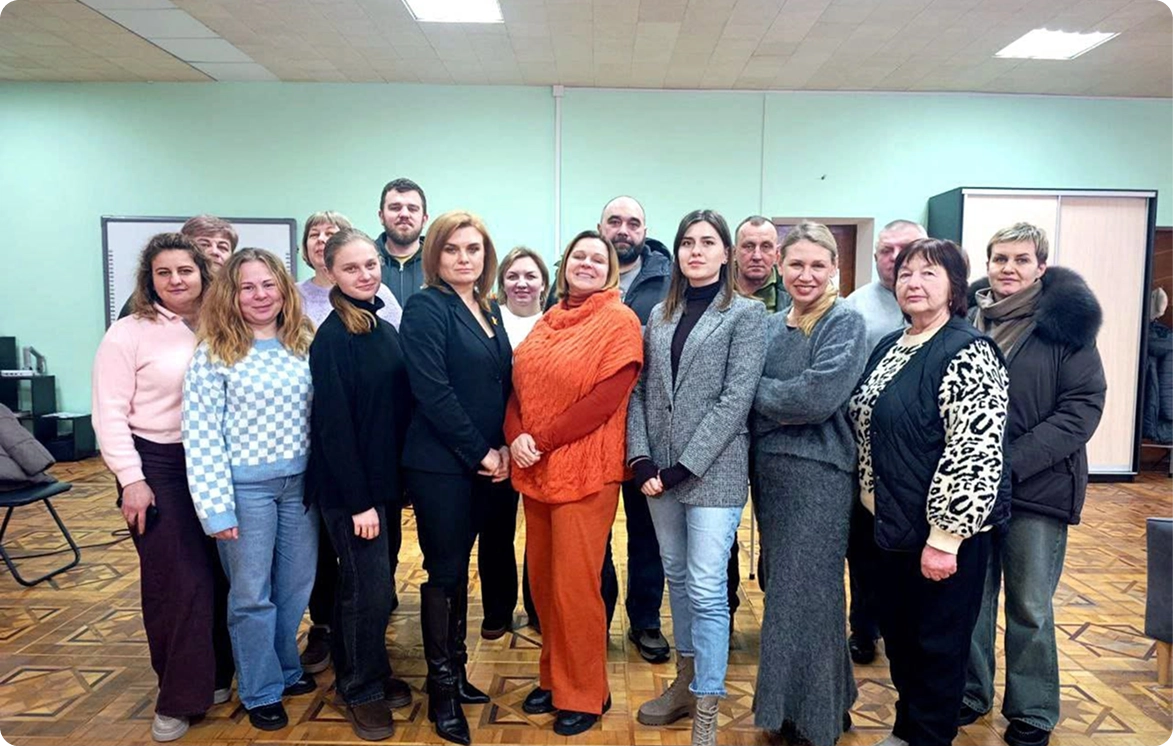
The next step was research into the community’s needs. In January and February 2026 the project team ran individual interviews, 4 focus groups and a facilitated session with young people, veterans and their families, older residents, librarians, representatives of local self-government and active members of the community.
The research revealed a clear demand for a new role for the library. Residents spoke about the need for an accessible and safe space, a place to meet and learn, psychological support, work with young people, modern digital services and regular community events. At the same time, the community stressed how important it is to preserve the library’s core value — access to books, knowledge and local history.
Building on the research, the architectural team developed the concept of the future library. In June 2026 the concept was presented to the community at an open discussion, where residents could see the proposed solutions and take part in the conversation.
International training for the architects became an important stage of the project. In August 2026 the team of the pilot libraries trained in Denmark in partnership with the Institute of Architecture and Design of the Royal Danish Academy, the Danish Library Association and the Danish Association of Architects.
Visits to libraries in Copenhagen and Aarhus, Dokk1 among them, along with lectures, master classes and workshops, helped adapt the best Danish practices to the Ukrainian context. That experience made it possible to refine decisions on universal design, accessibility and the organisation of space.
Today the project has moved to the next stage — the detailed design. The concept is turning into detailed architectural and engineering solutions that will become the basis for construction.
Where the project stands today:
• a memorandum of cooperation has been signed;
• individual interviews, 4 focus groups and a facilitated session have been held;
• an accessibility audit and a technical survey of the building have been carried out;
• Ukrainian and international experience of library transformation has been studied;
• the methodology of the “Libraries for everyone” programme has been shaped;
• the architectural concept has been developed and publicly presented;
• international training for the architects has taken place in Denmark;
• work on the detailed design stage is under way.
The next step is to begin implementation. As early as this autumn the team plans to move from planning to delivering the changes and creating a modern library designed around the real needs of people.
Bilohiria Library is one of the two pilots of the “Libraries for everyone” programme. It is here that a model of the modern library is taking shape and being tested — one that can later be scaled to communities across Ukraine.